A little clarity on biochar vs charcoal
From our friends at Biochar with Lottie
6/9/20262 min read
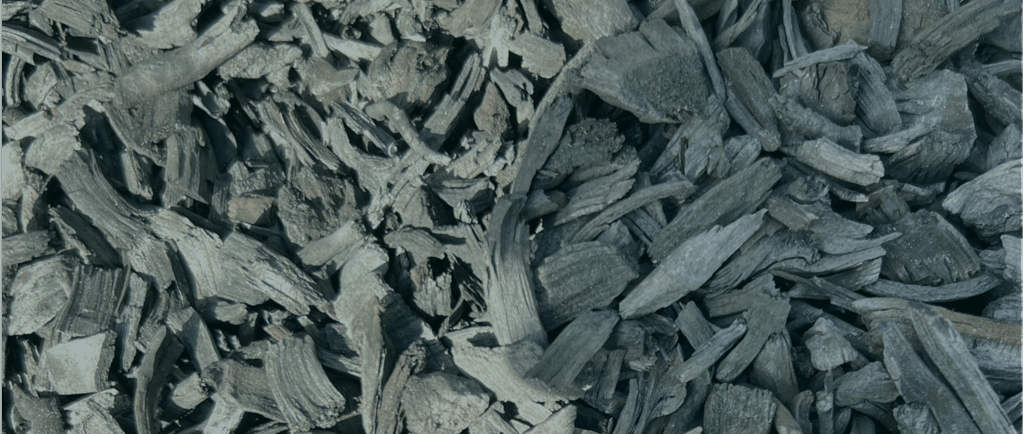
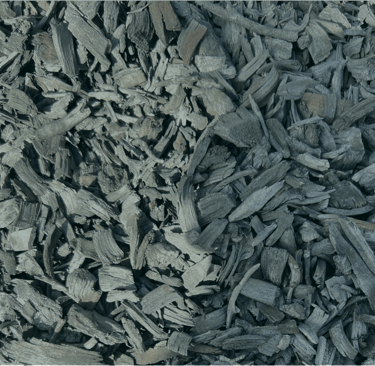
The question ‘what is biochar’ ranks 2nd worldwide for biochar search queries and in our opinion, any presentation on biochar needs to cover this first and foremost. Including how it can be differentiated from charcoal. Because if you don’t clarify the differences, you’re more likely to find growers heading to their local store to buy charcoal as soon as they hear biochar is more expensive.
Carbon Cousins
An easy way to start thinking about biochar is to first understand how it is made, because this process is key to differentiating between charcoal, biochar and activated carbon. They are carbon cousins with one another and their differences come about in production.
All of them are made by heating biomass in a low oxygen environment. This last bit is crucial because if you don’t restrict oxygen, the biomass is burnt to ash. Just like on an open fire. The process of heating with little oxygen is called pyrolysis.
The very same biomass can be used to make charcoal, biochar and activated carbon. The sliding scale of temperature (and pressure) affects the porosity of the finished product (further reading: Li et al. 2023). Each has it’s own name, and is suited to different applications.
Here is a short summary of the effects of temperature in pyrolysis:
Low temperatures → charcoal, not porous, best for cooking or fuel
Medium to high temperatures → biochar, porous, best for soil
Extremely high temperatures (+ pressure) → activated carbon, best for filters
Charcoal making uses a relatively low temperature during pyrolysis to create a smoke flavoured charcoal which is great on a BBQ and can also be used as a fuel. This is because the wood gases remain in the charcoal adding the flavour and making it easily flammable. Traditional charcoal making is done in an earth pit or ring kiln, pictured below, and operates around 300-500 C. It also gives off a lot of smoke.
Electroconductivity (EC)
Biochar typically has a higher EC than charcoal. In practical terms, this means it plays a more active role in nutrient exchange within the soil. Think of it less like a passive sponge and more like a charged scaffold. Nutrients can attach to its surface and be held in place, rather than leaching away with rainfall (Singh et al. 2017).
Charcoal, particularly low-temperature charcoal, hasn’t gone through the same level of thermal transformation. It still contains more volatile compounds and fewer stable charged surfaces. As a result, it doesn’t interact with soil chemistry in the same beneficial way, and in some cases can even tie up nutrients temporarily.
This is one of the reasons why simply crushing up BBQ charcoal and adding it to soil is not equivalent to applying biochar. The structure and chemistry just aren’t the same.
Smoke and sustainability
This is where things get a bit more uncomfortable, especially when talking about “traditional” methods.
Low-temperature charcoal production produces a lot of smoke. That smoke is essentially unburnt gases and particulates being released into the atmosphere. If you’ve ever stood downwind of a charcoal burn, you’ll know exactly what this means. On a larger scale, this contributes to air pollution and carbon emissions.
Modern biochar systems are designed very differently. Because they operate at higher temperatures, those gases are re-burnt within the system. This significantly reduces smoke and increases efficiency. In well-designed kilns, you’ll often see very little visible smoke once the system is up to temperatures.
Contact
Better Carbon B.V.
Schengestraat 35
4461 EW Goes
Netherlands
KVK / CoC: 98111493
Address
© 2026 Better Carbon BV
Robin: +31 6315 38878
Abhinand: +31 6877 23769
Wouter: +31 6147 59928